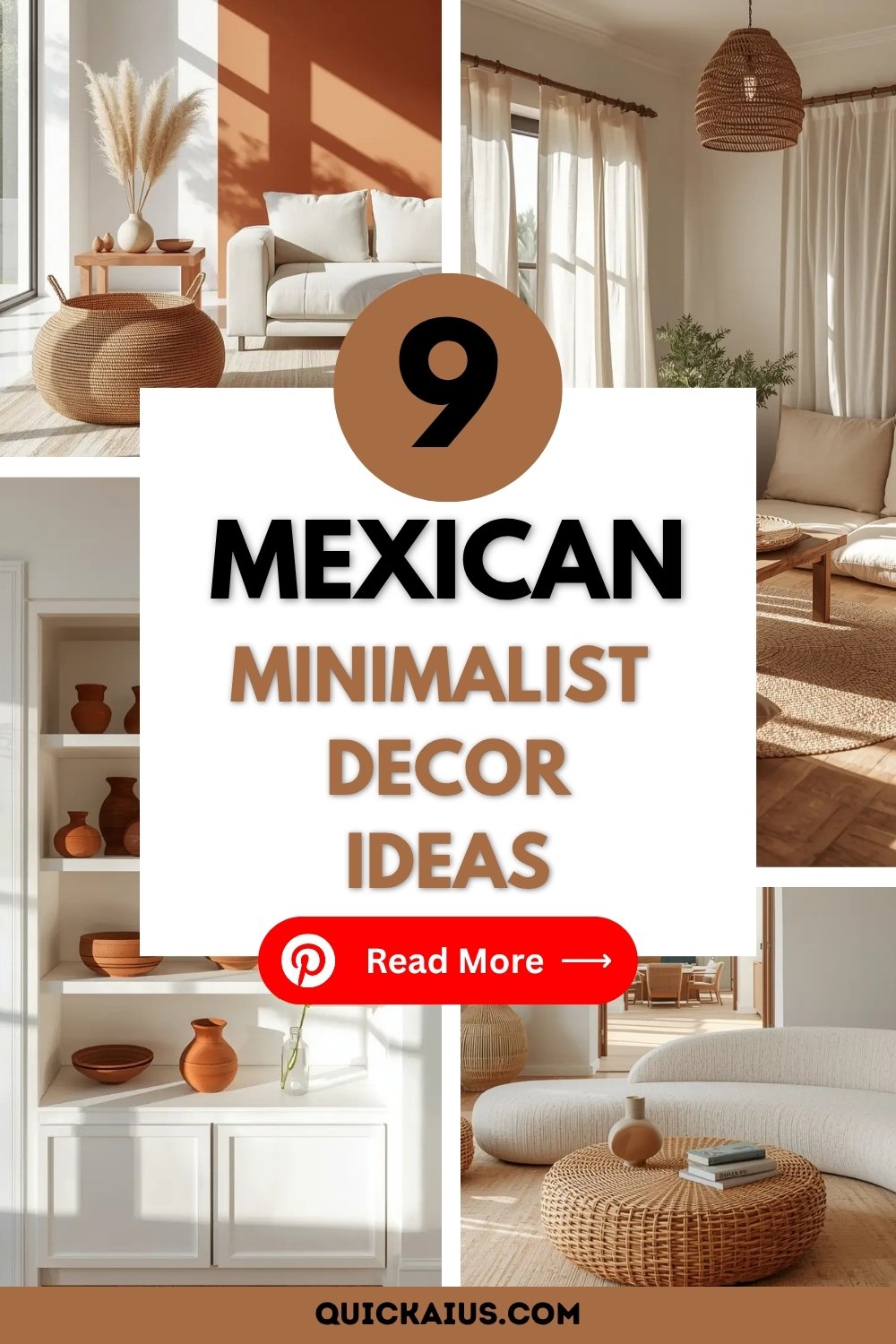
Your living room feels cold, doesn’t it? Most people assume minimalist design means sacrificing soul for sterile white walls. But when you strip a space down to its bones, you often lose the warmth that makes a house a home. The struggle is balancing clean lines with cozy textures.
This post delivers 9 specific Mexican minimalist decor ideas that solve that exact problem. We are combining the raw, organic textures of Mexican design with the simplicity of minimalism. From clay accents to natural fibers, you will learn how to create a space that feels curated, calm, and deeply inviting.
1. Layer Handmade Clay Textures on Shelves
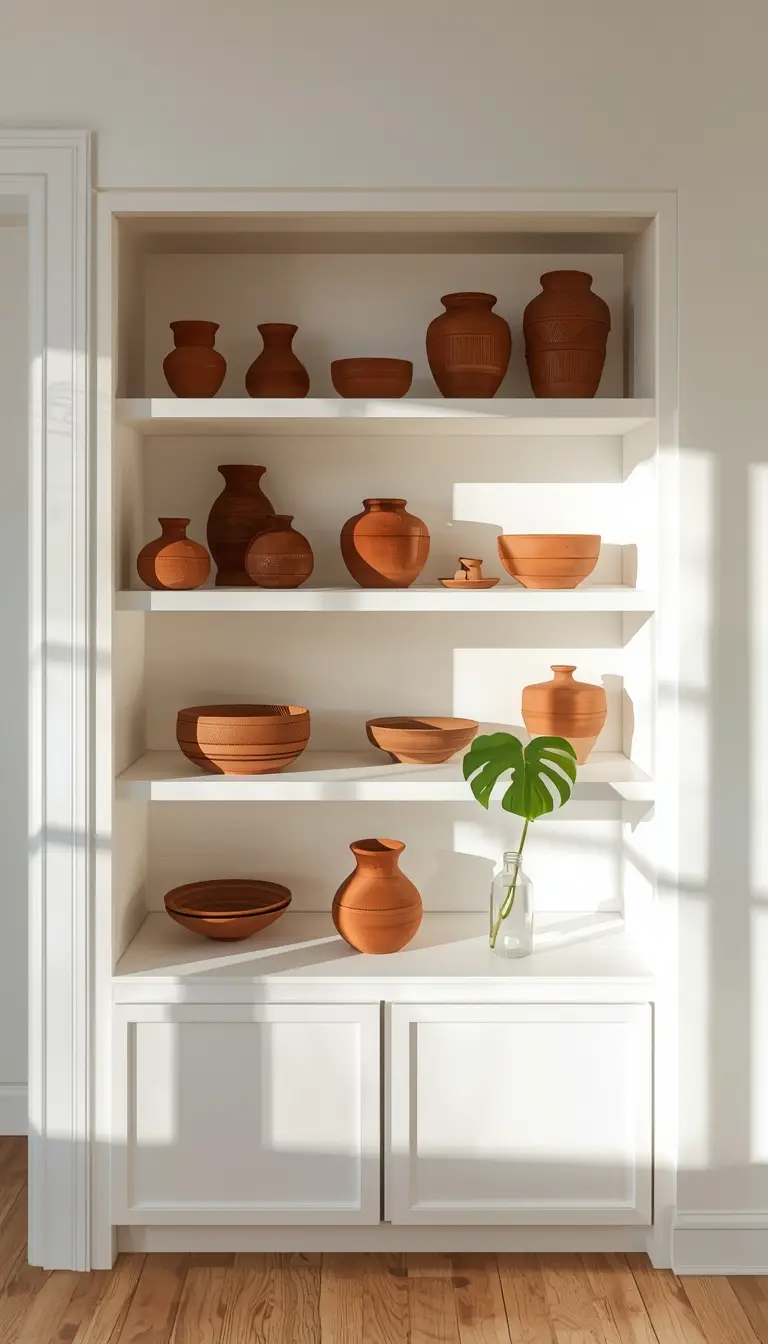
To infuse Mexican warmth into a minimalist framework, start with barro negro or terracotta. Instead of filling your shelves with books, create negative space around a few high-impact pieces. The key is restraint; choose three distinct clay objects with different heights. The rough, unglazed texture of the clay provides an organic contrast against smooth white walls. This tactile element tricks the eye into feeling warmth, even if the room’s color palette is strictly neutral.
You want to avoid the clutter of a traditional “maximalist” collection. Think of your shelving as an art gallery. A single Oaxacan black clay animal or a set of three rustic cooking bowls can serve as the focal point. When styling, ensure the clay is the star. Avoid adding colorful tchotchkes that compete for attention. Let the natural imperfections of the handmade pottery be the source of character, proving that minimalism doesn’t have to be mass-produced.
Shop the Look:
- Handmade Terracotta Vase Set
- Oaxacan Black Clay Animal Figurine
- Minimalist Floating Wall Shelves
- Natural Linen Table Runner
2. Use a Neutral Palette With One Earth Tone
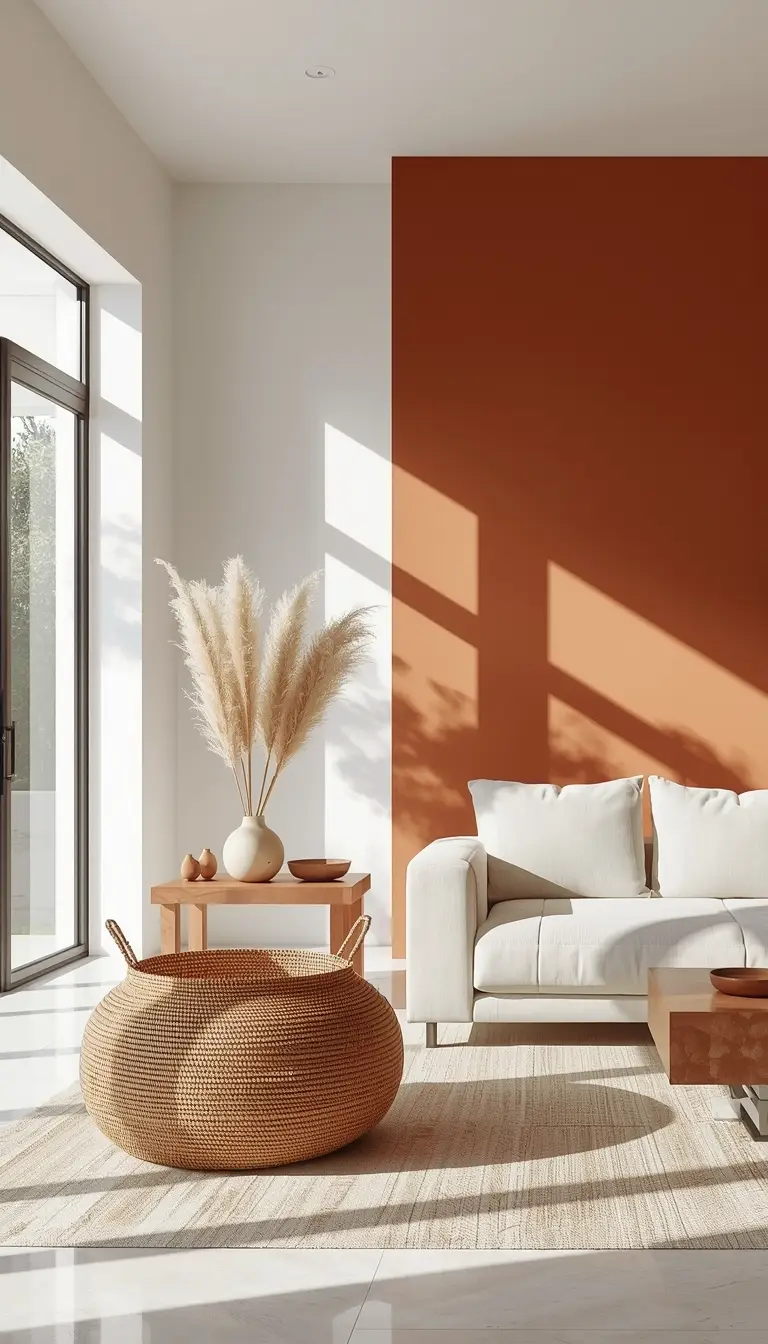
True Mexican minimalist decor relies heavily on the concept of “calma.” Start with a base of white, beige, and off-white to keep the space feeling airy and spacious. The warmth comes from introducing a single, dominant earth tone—usually a deep terracotta, a muted saffron yellow, or a soft adobe pink. Use this color on a feature wall, a large area rug, or a statement sofa. This approach keeps the space grounded without overwhelming the senses.
It is crucial to avoid introducing multiple competing colors. Stick to one hero shade derived from the Mexican landscape. Pair your chosen earth tone with natural wood and leather. For instance, if you paint a wall terracotta, ensure your furniture is a light oak or white oak. The goal is to mimic the aesthetic of a Mexican hacienda—sun-baked earth meeting crisp white plaster—resulting in a space that feels both modern and historically rich.
Shop the Look:
- Terracotta Colored Throw Pillow Covers
- Natural Jute Area Rug
- Minimalist Linen Curtains
- Rustic Wood Coffee Table
3. Hang a Single Large Woven Pendant Light
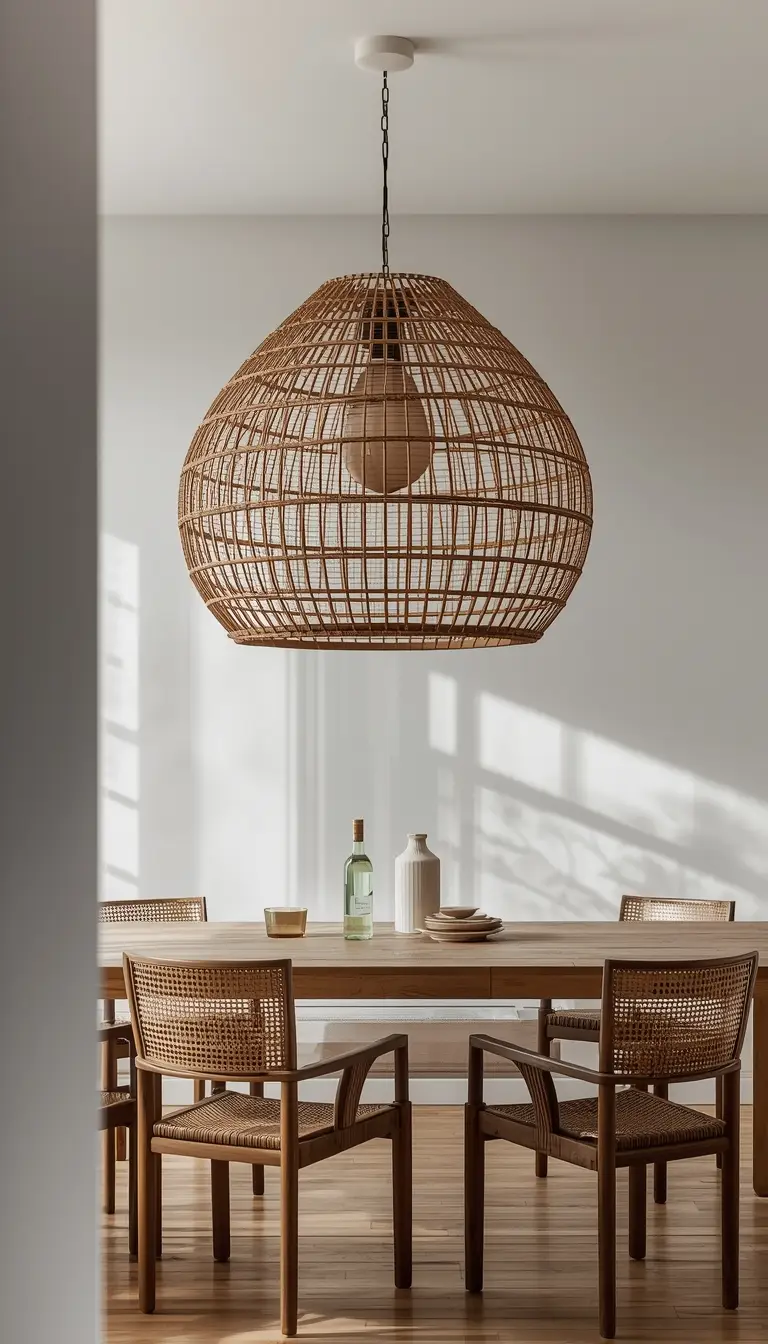
Lighting is often an afterthought in minimalist design, but in Mexican minimalism, it is the crown jewel. Swap out generic recessed lighting for a single, statement-making woven pendant light. Look for pieces made from rattan, palm, or ixtle fiber. The scale is important—go bigger than you think you need. The woven texture casts beautiful, intricate shadows on your ceiling and walls, adding visual interest without adding clutter.
This piece acts as functional art. By choosing a natural fiber pendant, you introduce a textural element that softens the hard lines of modern architecture. Ensure the rest of the room remains simple to let the light shine. A stark white room with a massive, hand-woven chandelier instantly feels more grounded and organic. It bridges the gap between the sleekness of minimalism and the artisanal soul of Mexican design.
Shop the Look:
- Large Woven Rattan Pendant Light
- Natural Palm Chandelier
- Dimmable Edison Bulbs
- Minimalist Ceiling Hook Kit
4. Introduce a Saltillo Tile Floor or Rug
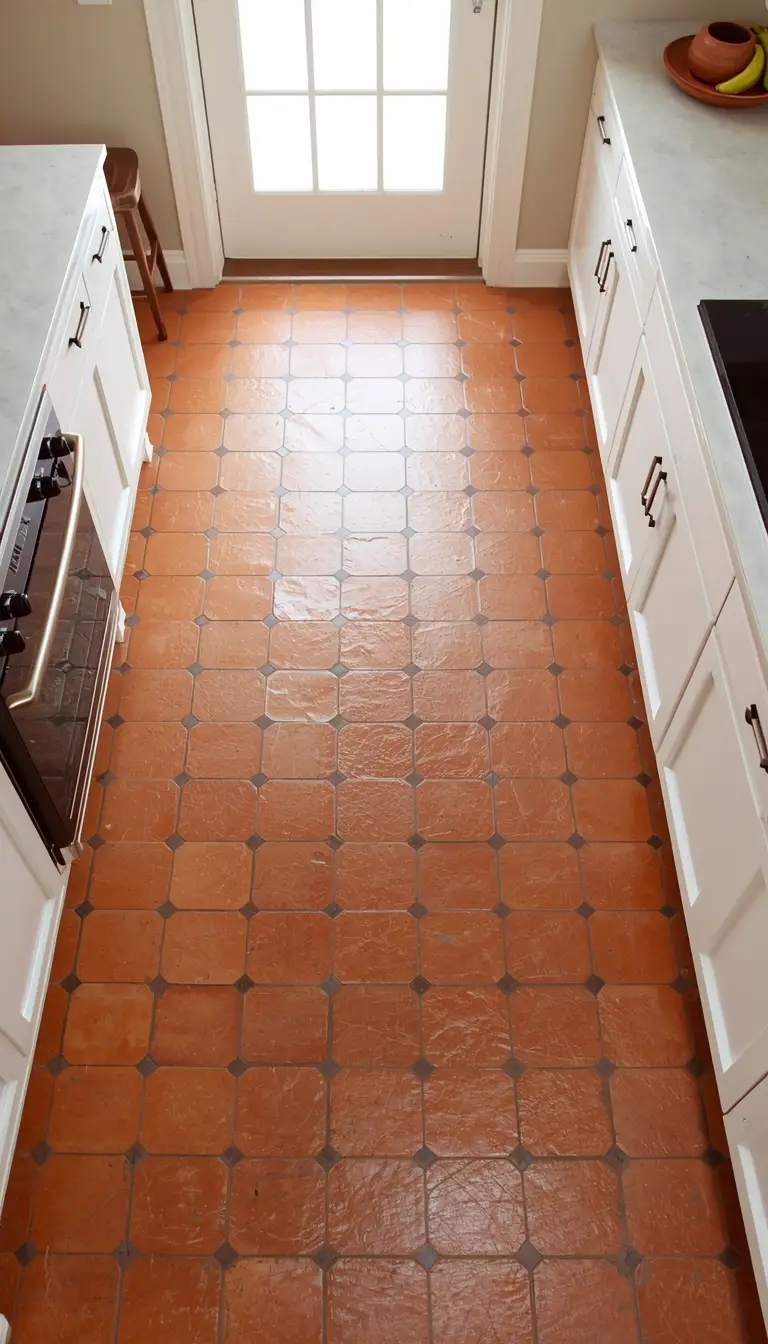
If you want instant warmth, look down. Saltillo tiles are the quintessential Mexican flooring. They have an uneven, handcrafted appearance that exudes character. If installing new flooring isn’t an option, achieve the same effect with a Saltillo-patterned area rug or a large jute rug with terracotta accents. The orange and rust hues of the tile act as a neutral foundation that pairs beautifully with white walls and natural wood.
This flooring choice instantly authenticates the space. It rejects the sterile perfection often associated with minimalism in favor of a “lived-in” beauty. To keep it looking intentional, pair the rustic floors with sleek, modern furniture. The juxtaposition of a glossy white kitchen island against a rustic terracotta floor creates a dynamic tension that is visually arresting and inherently warm. It grounds the room in a sense of place.
Shop the Look:
- Saltillo Terracotta Tile Look Rug
- Natural Jute Area Rug 8×10
- Rustic Clay Pot Planters
- Modern White Bar Stools
5. Style with Raw Wood and Chunky Textiles
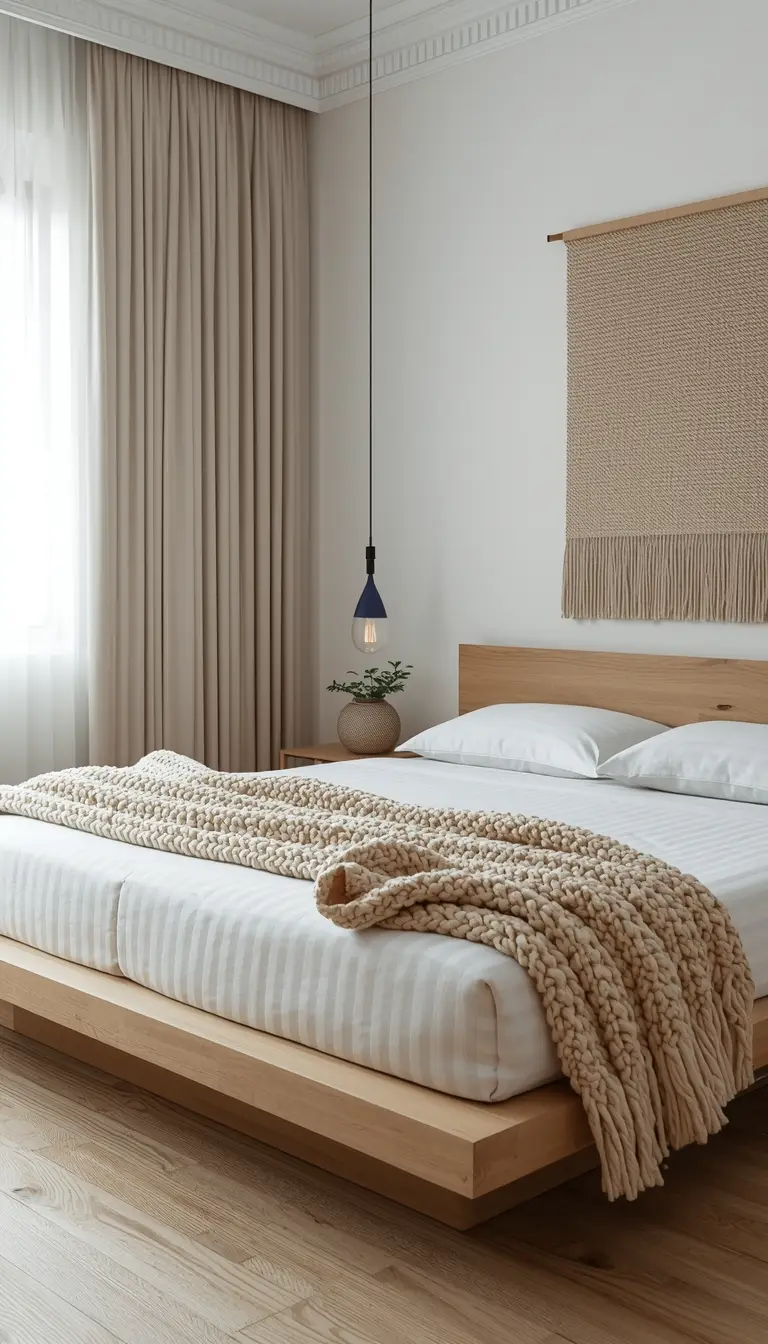
Mexican minimalism is all about “lo crudo” (the raw). Choose furniture with visible wood grain and natural edges. Avoid high-gloss finishes. Look for pieces made from parota, oak, or pine that show the craftsmanship. Balance the hardness of the wood with the softness of Mexican textiles. A chunky wool or cotton blanket draped over a chair or bed adds instant visual weight and comfort without looking messy.
The combination of raw wood and thick textiles creates a sensory experience. You want the room to invite touch. Stick to a monochromatic palette for these textiles—creams, ivories, and natural beiges—to maintain the minimalist ethos. A single “serape” or traditional blanket used as a throw can introduce pattern, but ensure the colors are muted or derived from the earth tones already present in the space to avoid visual chaos.
Shop the Look:
- Raw Wood Platform Bed Frame
- Chunky Knit Cotton Throw Blanket
- Woven Wall Hanging
- Natural Linen Duvet Cover Set
6. Use Talavera Tiles as a Focal Accent
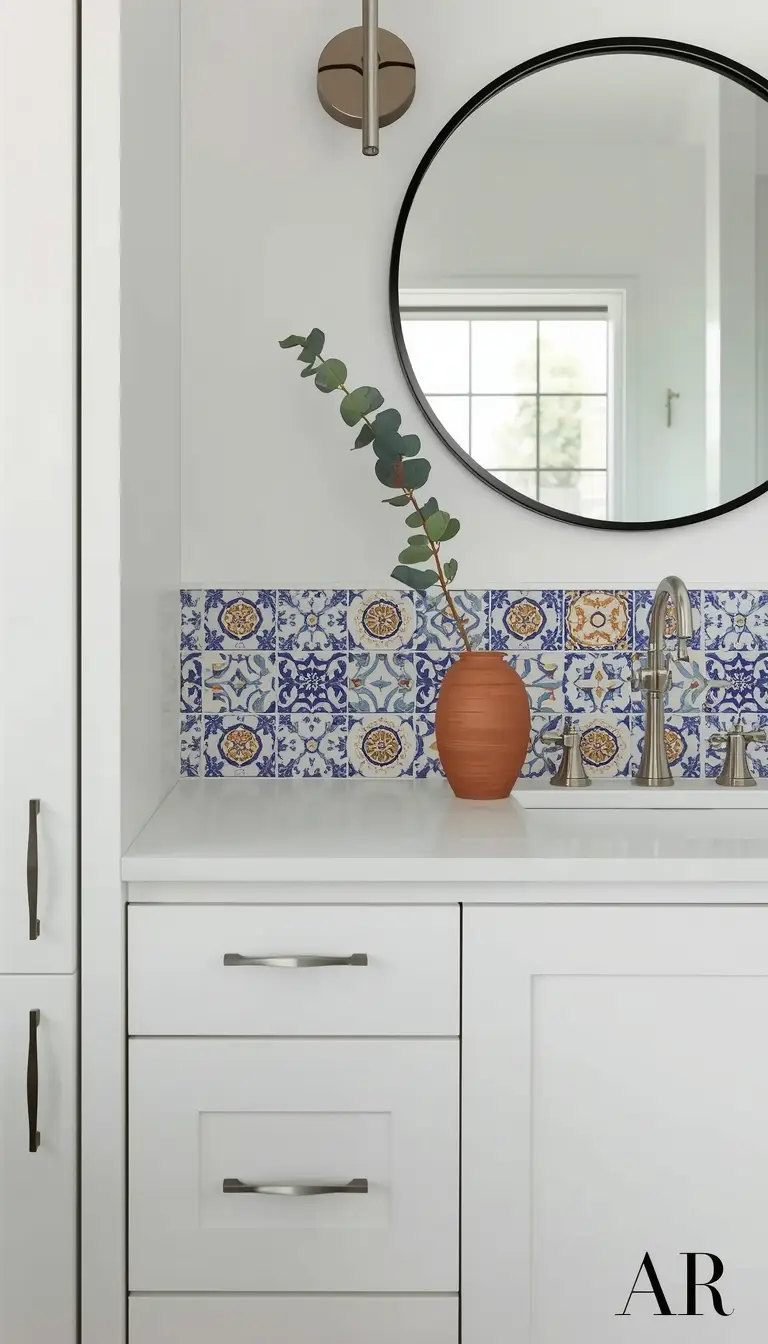
While Mexican minimalism favors neutrals, Talavera tiles offer a controlled way to inject pattern and history. The trick is to use them sparingly. Instead of tiling an entire wall, install them only on a kitchen backsplash, a shower niche, or as a border around a mirror. By confining the vibrant patterns to a small, defined area, you get the artisanal charm without overwhelming the minimalist structure.
Choose a Talavera pattern with a limited color palette—classic blue and white is a safe, elegant choice. This creates a focal point that draws the eye. The hand-painted imperfections of the tiles add a layer of authenticity that mass-produced subway tiles lack. This single splash of Mexican artistry acts as a conversation starter, proving that you can have intricate detail in a room that otherwise breathes simplicity.
Shop the Look:
- Talavera Style Tile Decals (Peel and Stick)
- Blue and White Mexican Ceramic Vase
- Round Gold Framed Mirror
- Floating Wood Bathroom Shelf
7. Incorporate Dried Palm or Grass Decor
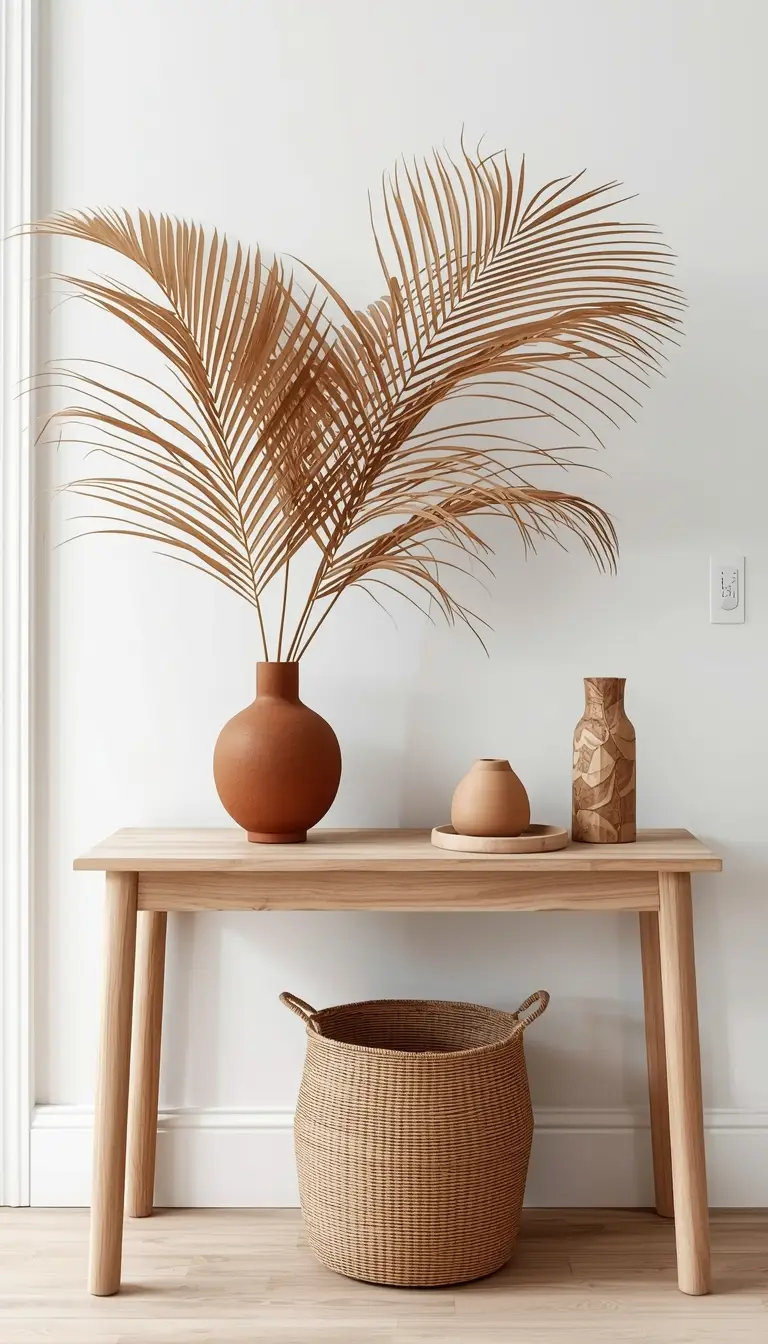
Greenery is essential, but dried botanicals offer a low-maintenance, sculptural alternative that aligns with the minimalist aesthetic. In Mexican decor, dried palm leaves, bunny tail grass, or eucalyptus are staples. Place a large arrangement of dried palm fronds in a simple clay or cement vase. The dried texture brings an arid, desert-like warmth to the room, mimicking the Mexican landscape.
Unlike fresh flowers that require upkeep, dried arrangements maintain their form and color for years. They add height and drama without demanding attention. This is ideal for a minimalist who wants nature indoors but dislikes clutter. The golden hues of dried grass contrast beautifully against white walls, creating a soft, sun-baked feeling even on a cloudy day. It is an effortless way to bring the outside in.
Shop the Look:
- Dried Palm Fronds Bundle
- Large Terracotta Vase
- Dried Pampas Grass Decor
- Minimalist Entryway Console Table
8. Embrace Curved Architecture & Furnishings
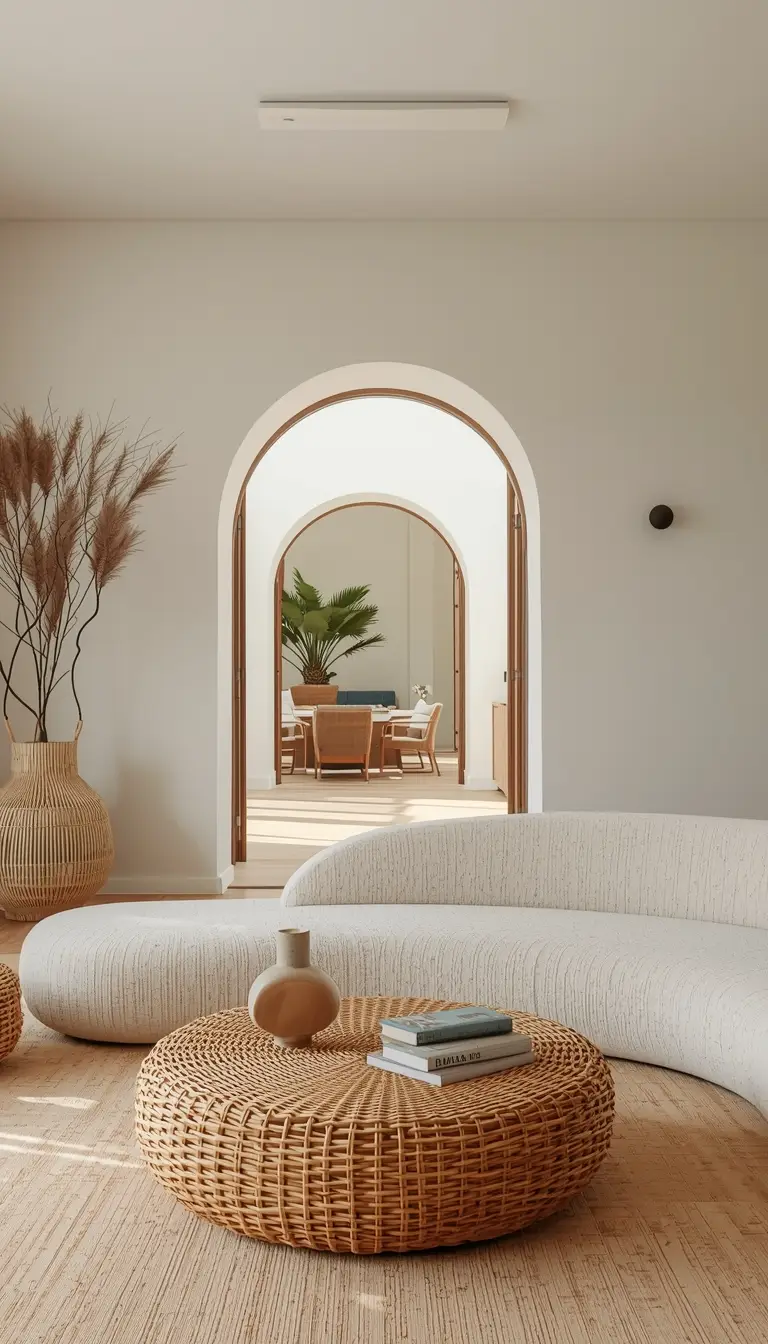
Mexican architecture is famous for its soft edges. To replicate this feeling, introduce furniture with curved silhouettes. A round, chunky coffee table or a sofa with rounded arms breaks the rigidity of boxy, minimalist layouts. Curves mimic the organic forms found in nature and traditional Mexican haciendas, creating a sense of flow and ease throughout the space.
If you have the budget, consider adding an arched doorway or arched built-in shelving. If not, a large arched mirror can achieve a similar effect. The absence of sharp corners makes a room feel less formal and more inviting. This design choice supports the “warm minimalism” concept perfectly—it feels intentional, sculptural, and high-end, yet it evokes the welcoming embrace of traditional Mexican hospitality.
Shop the Look:
9. Create a Low-Seating “Tepetate” Zone
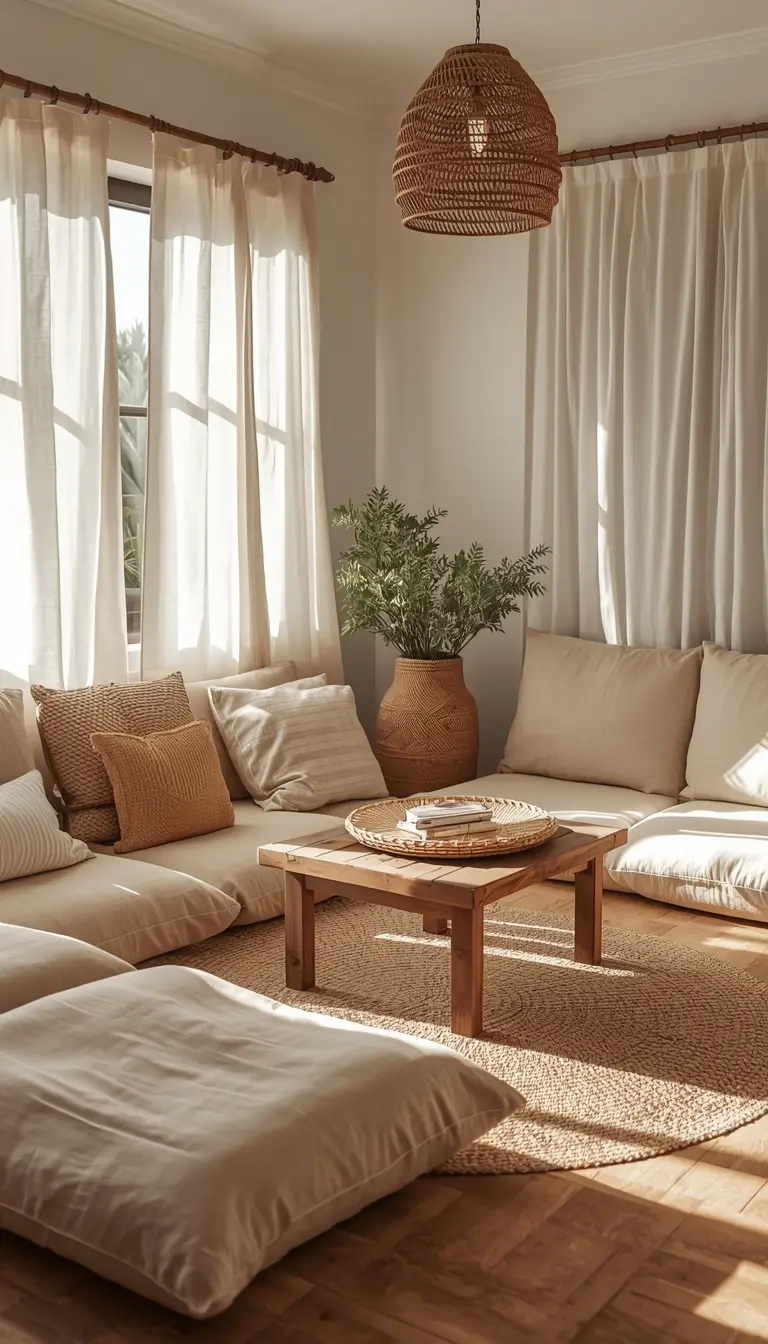
To truly embrace the relaxed warmth of Mexican culture, lower your center of gravity. Create a seating area using floor cushions, low poufs, and a short wooden table. This “Tepetate” style (named after the traditional low beds) encourages lounging and conversation. It instantly changes the energy of a room from formal to familial. It is the ultimate way to make a minimalist space feel inviting.
This area becomes a focal point for relaxation. Use a large, natural fiber rug as the base to define the zone. Keep the cushions in neutral, washable fabrics to maintain the minimalist look while ensuring practicality. This setup works perfectly in a corner of the living room or a sun-drenched patio. It signals that the home is meant to be lived in, not just looked at, blending function with soul.
Shop the Look:
If you loved learning how to blend organic textures with clean lines, you will adore our guide on creating the perfect neutral palette. We covered how to use color to create calm, and it pairs perfectly with the earthy tones we discussed here. Go check out 9 Cozy Room Decor Small Bedrooms That Feel Bigger next.
Related Posts
- 5 Neutral Color Palettes That Make Small Rooms Look Bigger
- The Ultimate Guide to Styling with Natural Textiles
- How to Mix Modern Furniture with Rustic Mexican Accents