
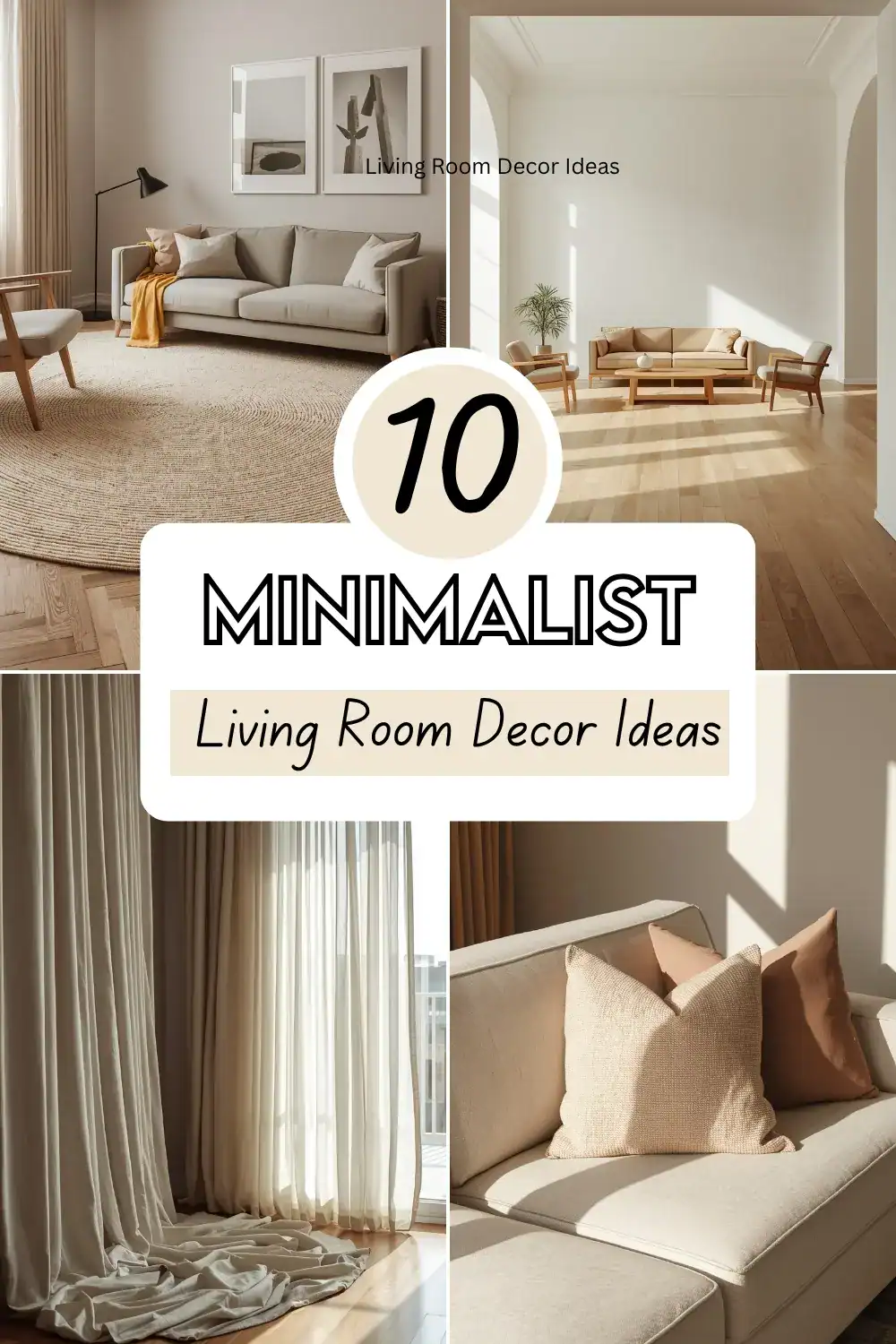
Your living room feels cluttered no matter how many times you tidy it — and you’re not alone in that. Most of us grew up thinking more furniture meant more comfort, but the truth is, a thoughtfully stripped-back space actually feels far more restful, more intentional, and yes, more expensive too.
In this post, I’m sharing 15 furniture-first minimalist living room ideas that prove you don’t need a designer budget to create a space that looks like one. Every idea is practical, Pinterest-worthy, and completely achievable on a weekend.
Let Your Sofa Do All the Talking
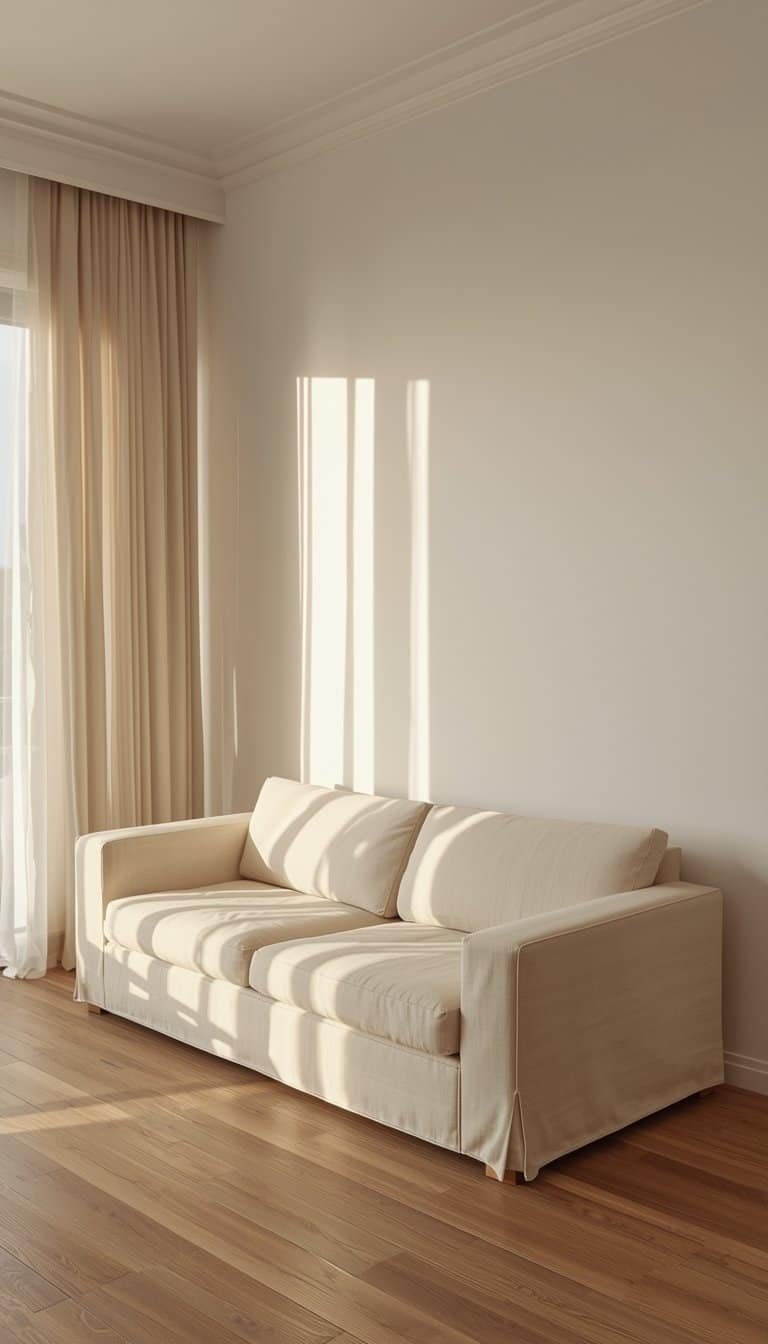
When you strip a room down to one hero piece, your sofa becomes the entire story — and that’s actually a good thing. Choose a low-profile silhouette in a natural, undyed fabric like oatmeal linen or soft boucle, and let it sit without competing accessories around it. Your room will immediately look more curated and calm, even if you haven’t changed anything else. The trick is trusting negative space the way a good editor trusts white space on a page.
Position your sofa against the longest wall in your room and leave at least 18 inches of breathing space on each side rather than pushing it into a corner. This small shift changes how the entire room feels — suddenly the space has rhythm, not just furniture shoved in wherever it fits. If your sofa is older, a well-fitted slipcover in a neutral tone can transform it completely for under $100, giving you that fresh, expensive look without any commitment to something new.
Shop the Look
- Cream Linen Low-Profile Sofa
- Neutral Fitted Sofa Slipcover
- Boucle Minimalist Sofa
- Sheer Linen Curtains in White
Put the Bed Against the Longest Wall — For Your Sofa Too
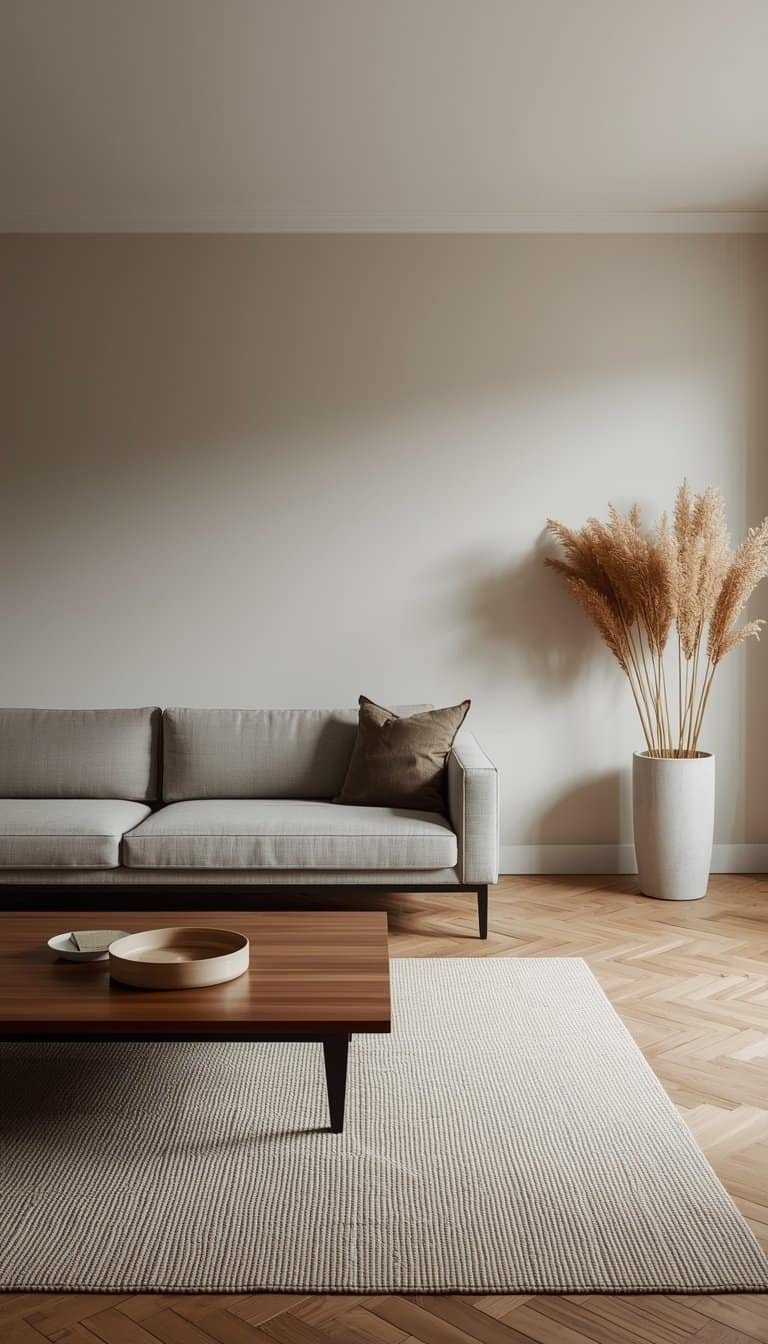
Most people place their sofa facing the TV and never question it — but anchoring it to the longest wall first creates a sense of architectural intention that instantly reads as designed. This layout gives you more usable floor space around the seating area, which is the number one thing that makes a room feel larger without knocking down a single wall. Your room will stop looking accidental and start looking like someone actually thought about it, because now, you have.
Once the sofa is in place, resist the urge to add a second one right away. A pair of low chairs or a single upholstered bench creates better visual flow and keeps the minimalist energy intact. If your room is on the smaller side, a round coffee table rather than a rectangular one will keep the traffic flow from feeling tight. You want people to move through your living room easily, not navigate around it like an obstacle course.
Shop the Look
- Round Solid Wood Coffee Table
- Concrete Indoor Planter
- Dried Pampas Grass Stems
- Low-Profile Neutral Accent Chair
Hang Exactly One Piece of Art — and Make It Count
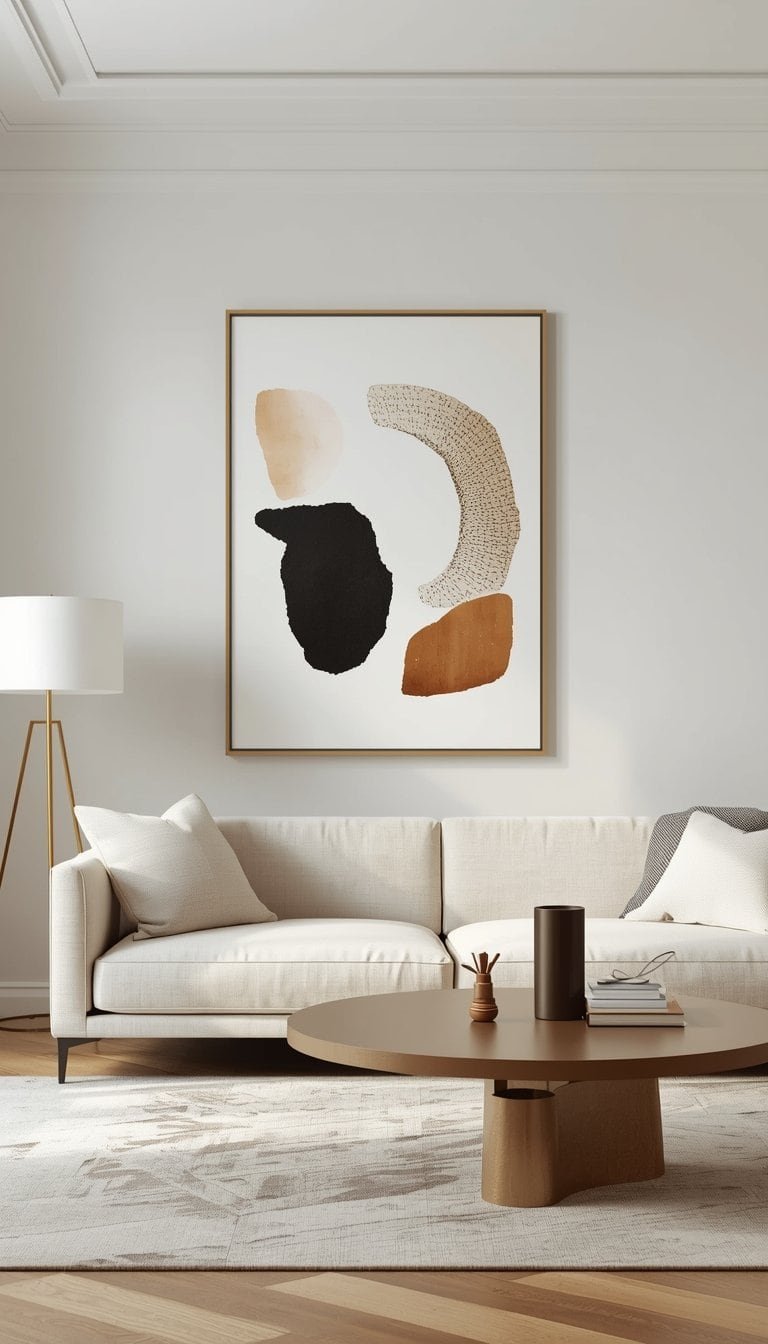
Gallery walls are having a well-deserved rest, and single oversized art pieces are taking their place as the dominant choice in considered, minimal interiors. One large print hung properly above your sofa creates a focal point that anchors the entire room in the same way a fireplace would — it gives the eye somewhere intentional to land. The size matters more than anything else here; a print that’s too small will float awkwardly and look like an afterthought, so aim for something that’s at least two-thirds the width of your sofa.
You don’t need to spend a fortune on art. Abstract prints from independent designers on Etsy, architectural photography, or even well-framed textile swatches can all work beautifully in a minimal space. The frame is actually where you should invest your budget — a thin black metal or raw wood float frame elevates even the simplest image into something gallery-worthy. Hang it so the center of the piece sits at eye level, which is about 57 to 60 inches from the floor, and leave at least eight inches of wall between the bottom of the frame and the top of your sofa.
Shop the Look
- Oversized Abstract Wall Art Print
- Thin Gold Metal Picture Frame
- Black Float Frame Large
- Heavy-Duty Picture Hanging Strips
Layer Your Lighting Across Three Different Heights
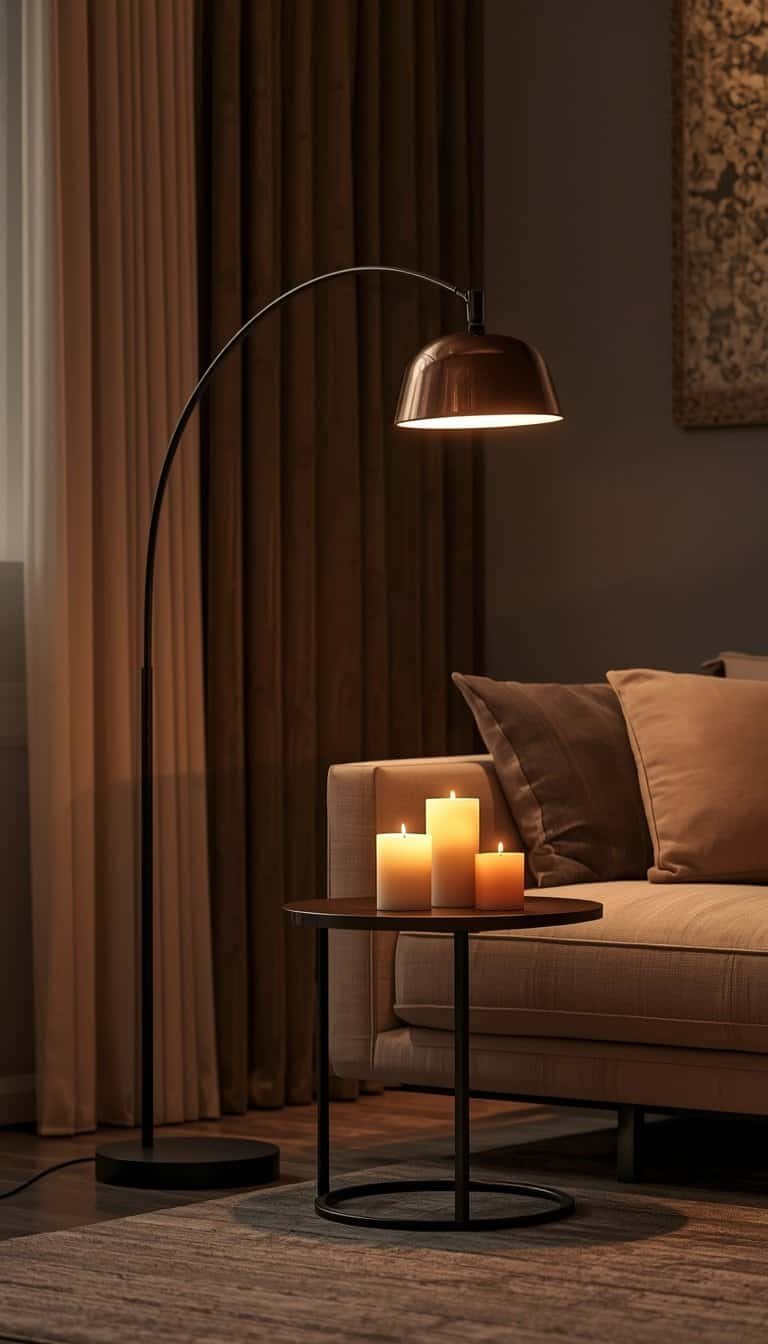
Overhead lighting is the enemy of atmosphere — and yet most living rooms rely on it entirely. The moment you switch off the ceiling light and use layered sources at different heights instead, your room transforms from a waiting room into something that feels genuinely warm and alive. An arc floor lamp behind the sofa provides high ambient light, a table lamp on a console brings it to mid-height, and a cluster of candles or low tabletop lights ground the space at sitting level. Together, they create depth that a single ceiling fixture simply cannot replicate.
For a truly luxurious effect, keep all your bulbs within the same warm color temperature — 2700K is ideal, and it’s worth the minor effort of replacing any cool-toned bulbs you currently have. Dimmer switches are one of the highest-return investments you can make in any room; being able to lower the lighting to 30 percent in the evening completely changes how your space reads and feels. A room that glows warmly at night is a room that people remember and want to come back to, and the upgrade costs less than most throw pillows.
Shop the Look
- Minimalist Arc Floor Lamp
- Warm Neutral Small Table Lamp
- In-Wall Smart Dimmer Switch
- Ivory Pillar Candle Set
Use a Single Large Rug Instead of Multiple Smaller Ones
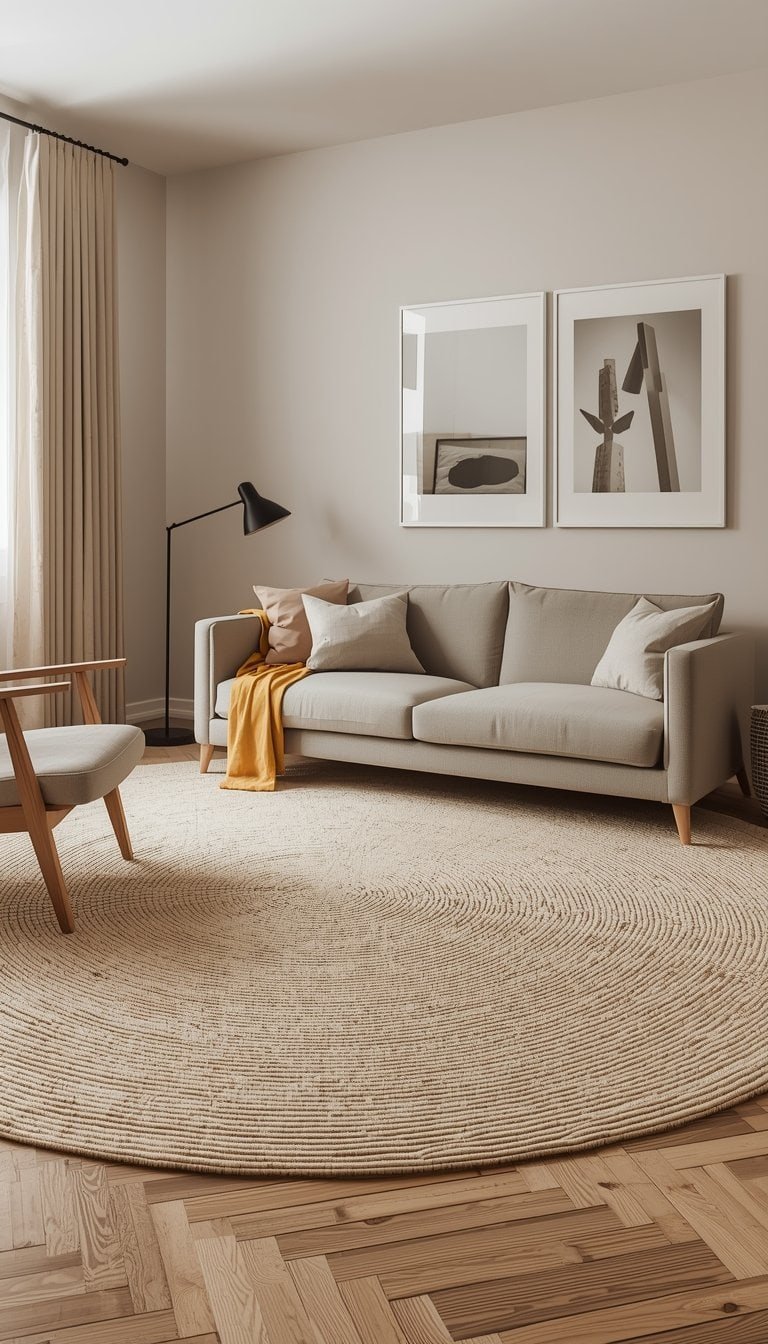
A rug that’s too small is one of the most common and easily fixable mistakes in living room decorating — it makes the furniture look like it’s floating on islands rather than belonging to a unified space. Go bigger than feels comfortable. In a standard living room, a 9×12 rug should be your baseline, with the front legs of every main seating piece sitting on top of it. This creates a visual boundary for your seating zone that immediately reads as intentional, pulled-together, and edited — all words you want someone to associate with your room.
For a minimalist look, stick to rugs with low pile or flat weave in natural fibers — wool, jute, sisal, or a wool-jute blend all work beautifully and age incredibly well. Avoid busy patterns entirely; instead, look for subtle texture variation like a ribbed weave or diamond flatweave that adds quiet visual interest without competing with the rest of the room. If your rug is sliding on hardwood floors, a good rug pad is essential — it protects your floors, adds cushioning underfoot, and keeps everything looking neat rather than bunched and crooked.
Shop the Look
- Large Neutral Wool Area Rug 9×12
- Flatweave Jute Rug 8×10
- Non-Slip Rug Pad for Hardwood
- Wool-Jute Blend Area Rug
Float Your Furniture Away From Every Single Wall
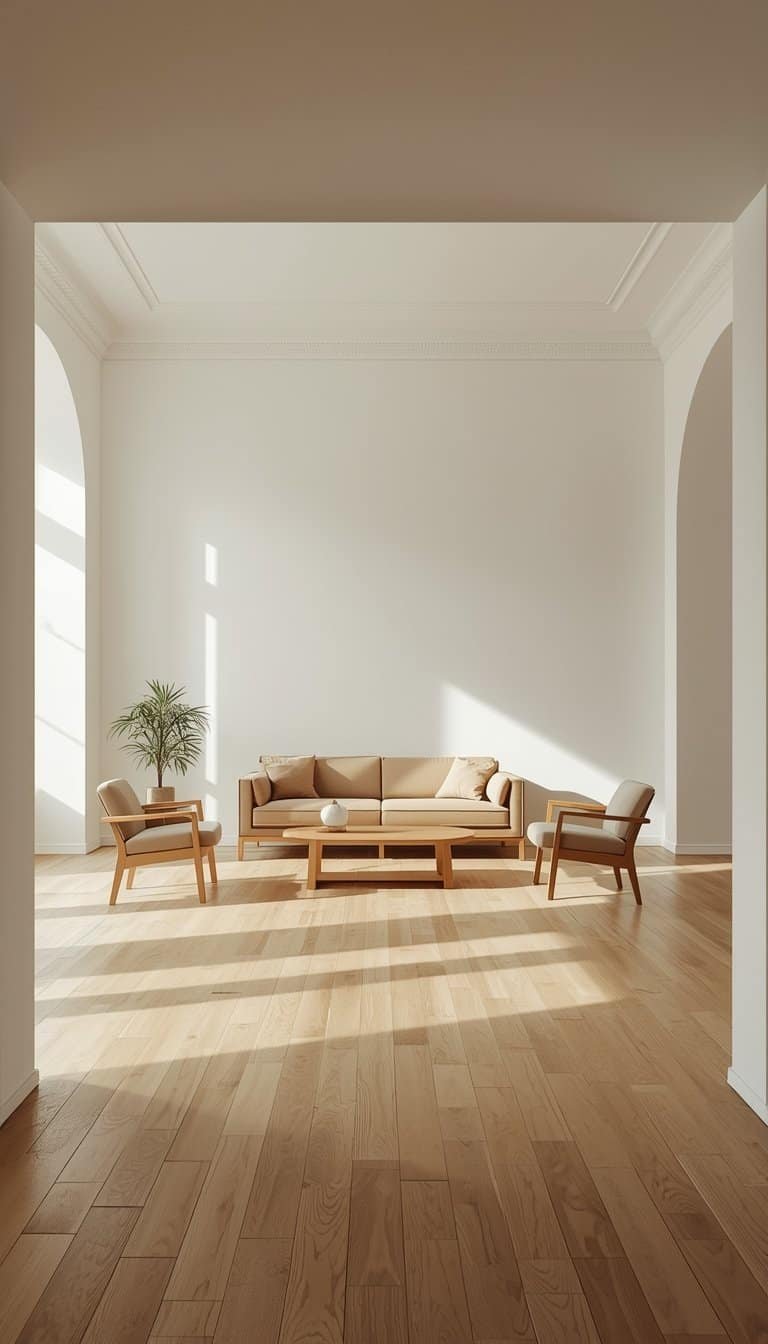
Pushing all your furniture against the walls is the most natural impulse in the world — it feels like you’re maximizing space — but it’s actually the thing that makes a room feel smallest and most awkward. Pulling everything just six to twelve inches away from the walls creates breathing room that makes the space feel larger, more curated, and far more like a real design decision was made. Interior designers never push furniture against walls in rooms that are meant to be lived in; the gap creates depth and flow that changes how the entire room reads.
Once your sofa and chairs are floating, you’ll notice the room starts to have a center — a gathering point — rather than just furniture arranged around the perimeter like chairs in a dentist’s waiting area. Group everything around your coffee table so there’s a clear conversation zone, and let the floor around the edges of the room show. That visible floor space, especially in a warm wood or stone finish, is some of the most valuable visual real estate in your living room, and right now most people are covering it up with furniture that doesn’t need to be there.
Shop the Look
- Furniture Floor Protector Pads
- Minimalist Upholstered Accent Chair
- Round Natural Jute Rug
- Hardwood Floor Cleaning Kit
Choose Curtains That Pool Slightly on the Floor
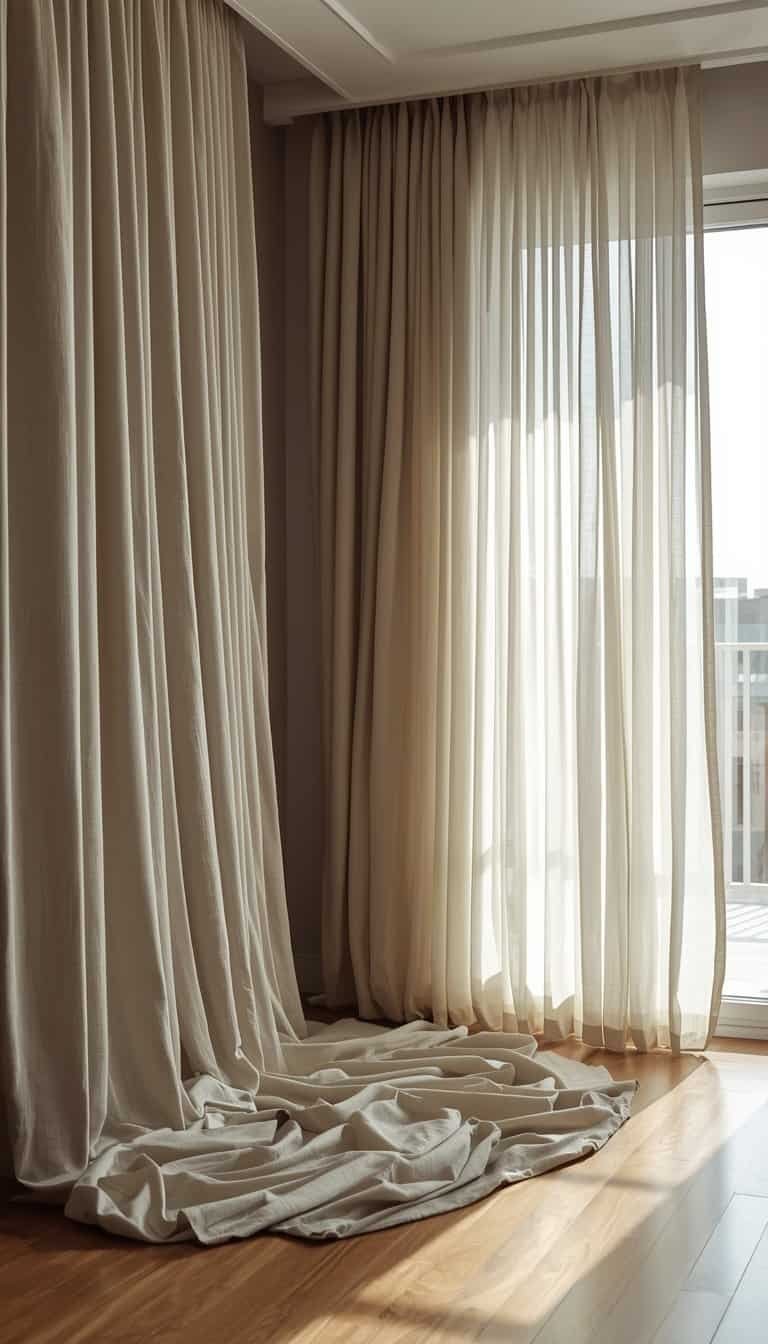
Nothing makes a room look more expensive than curtains that hang from ceiling to floor — or very close to it — and yet most ready-made curtains are sized for standard windows and end up hovering awkwardly above the baseboard. Hanging your curtain rod as close to the ceiling as possible and letting the fabric pool one to two inches on the floor creates the kind of dramatic, luxurious window treatment that used to require custom drapery. It makes the ceiling feel taller, the windows feel larger, and the room feel instantly more considered.
Stick with unlined linen or cotton voile for a minimalist room — something sheer enough to let filtered light through while still providing a sense of softness and enclosure. Keep colors within your tonal palette and avoid any prints or patterns entirely; the visual weight of plain fabric hanging in clean vertical lines is everything you need. If your current curtains are too short, you can often add a hidden strip of matching fabric to the hem without it being visible once they’re hung, which is a much cheaper option than replacing them entirely.
Shop the Look
- Floor-to-Ceiling Linen Curtains
- Ceiling-Mount Curtain Rod
- White Cotton Voile Sheer Curtains
- Iron-On Curtain Hem Tape
Introduce Raw Natural Materials as Your Luxury Element
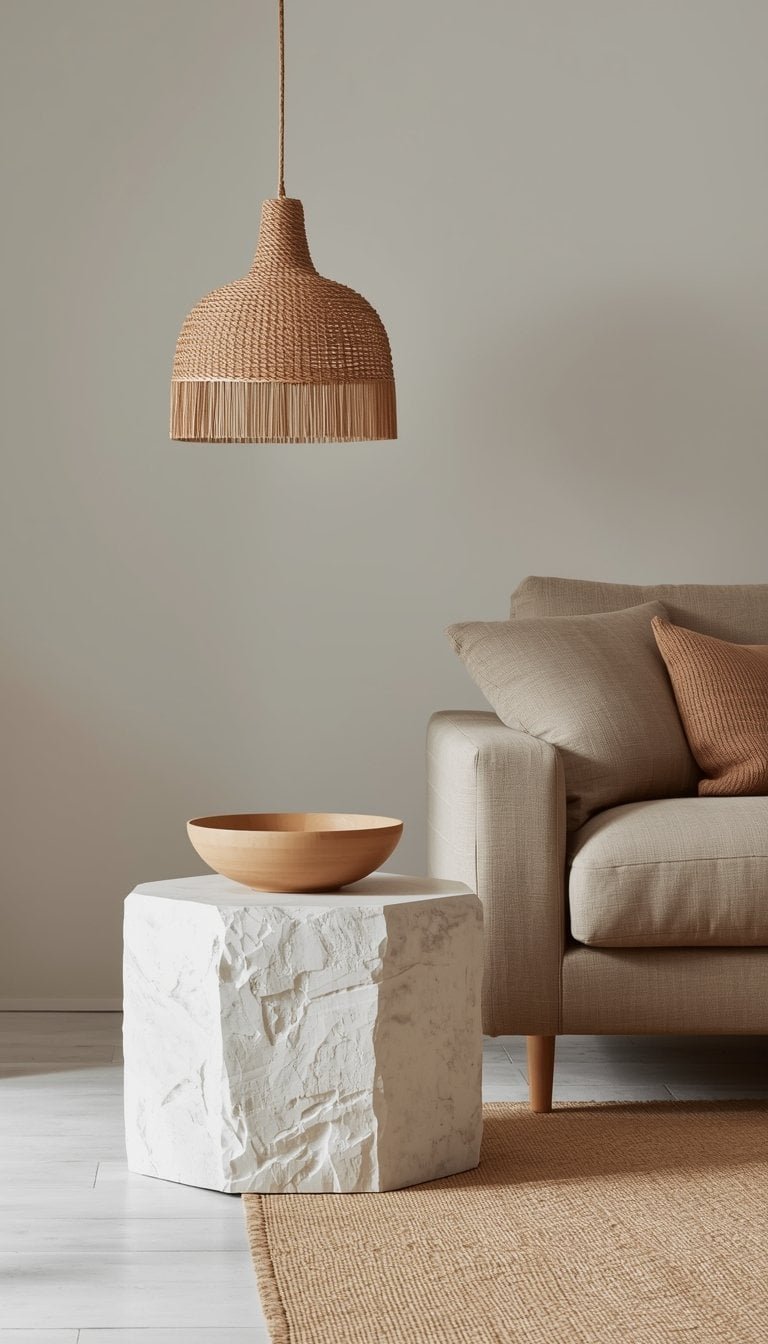
Minimalist living room featuring raw travertine side table, linen sofa, handmade ceramic bowl, and natural raffia pendant light with organic shapes
Raw, imperfect, natural materials are having a genuine moment in interior design, and the reason is simple — they bring a warmth and authenticity into a room that no synthetic material can replicate. Travertine, unsealed limestone, raw plaster, handmade ceramics, unfinished wood, and natural raffia all carry visible marks of their making that add quiet character without any pattern or color at all. In a minimalist room where you’re deliberately using fewer objects, the quality and materiality of each piece you do choose becomes exponentially more important.
You don’t need to replace everything at once — start with one or two key pieces that you’ll see every day, like a handmade ceramic lamp base, a raw stone side table, or a woven rattan pendant light. These objects work hardest when they sit against clean, simple surfaces because nothing is competing with them. A handmade bowl on an otherwise empty shelf, or a single piece of rough travertine on a bare coffee table, carries more visual weight and interest than five carefully styled decorative objects could together, because it’s doing the work through material rather than quantity.
Shop the Look
- Travertine Stone Side Table
- Handmade Neutral Ceramic Bowl
- Natural Rattan Pendant Light
- Raw Wood Stump Side Table
Hide All Technology When It’s Not in Use
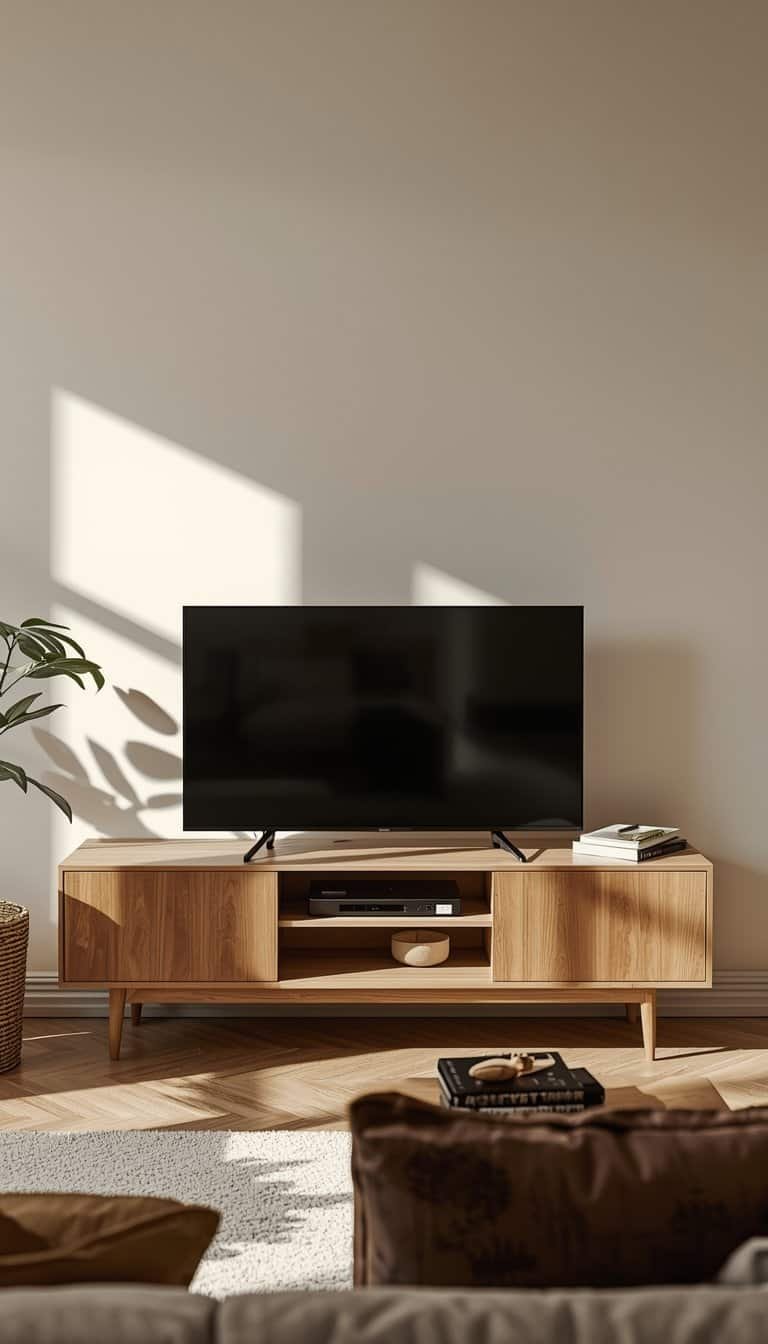
Nothing disrupts the visual calm of a minimalist living room faster than a large black TV screen staring back at you from the wall, surrounded by a tangle of cables and a collection of devices. The TV is necessary and we’re not suggesting you get rid of it — but giving it a place to disappear into when it’s off changes everything about how your room feels during the other 18 hours of the day. A media cabinet with doors that close over the screen, or a TV that mounts flush to the wall with a cable management channel, moves your room from functional to actually designed.
If you love your TV and want it accessible without a cabinet, consider mounting it inside a shallow alcove or flanking it with vertical shelving that gives the screen context within a larger designed composition rather than just bolting it to an empty wall. Painting the wall behind the TV the same dark shade as the screen — deep charcoal or black — makes the TV visually recede when it’s off so it stops dominating the room entirely. Wireless charging pads, cord clips behind furniture, and a small basket with a lid for remotes will handle the rest of the clutter that tends to cluster around the screen.
Shop the Look
- Minimalist Media Cabinet with Doors
- Wall Cable Management Channel
- Small Lidded Basket for Remote Storage
- Slim Wireless Charging Pad
Use Mirrors to Double Your Natural Light
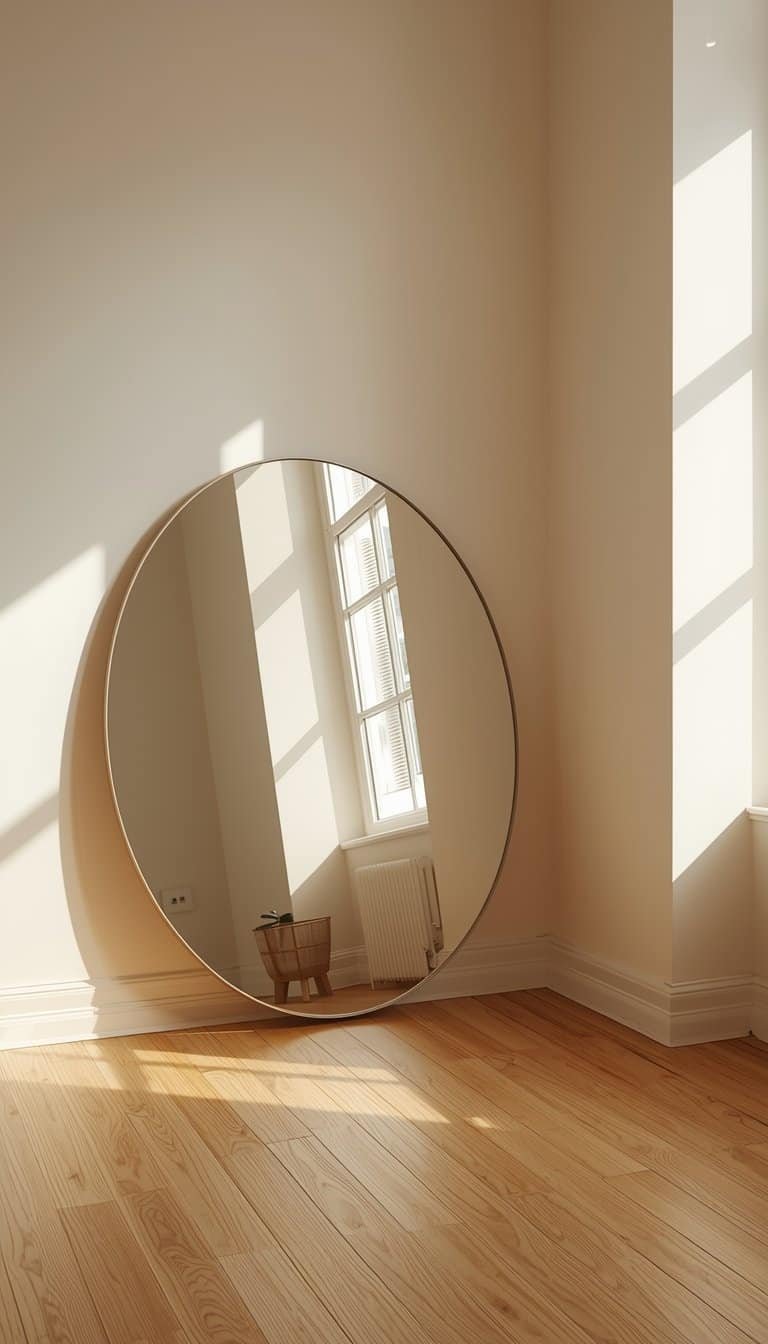
A large mirror placed opposite or adjacent to your main window is one of the oldest and most effective tricks in interior design — it bounces natural light back across the room and makes even a north-facing space feel considerably brighter and more open. In a minimalist room, a mirror also serves as wall art, filling vertical space without adding the visual complexity of a painting or gallery. A large round mirror leaning against the wall rather than hung feels more relaxed and less formal, and it’s forgiving if your walls aren’t perfectly level or you’d rather not commit to drilling into plaster.
Choose a mirror with a minimal frame — thin brass, brushed black metal, or raw wood all work beautifully without fighting the rest of the room for attention. Scale matters as much as placement; go bigger than you think you need to, especially if your room is on the darker side. A mirror that’s at least 24 to 30 inches in diameter will make a genuine difference to how much light moves through the space, while anything smaller starts to look decorative rather than architectural — which is the effect you’re after in a room built on intention and restraint.
Shop the Look
- Large Round Brass Mirror 30″
- Minimalist Leaning Floor Mirror
- Large Arch Mirror Black Frame
- Heavy-Duty Mirror Mounting Hardware
One Of My Favorite
Edit Your Throw Pillows Down to Three — Maximum
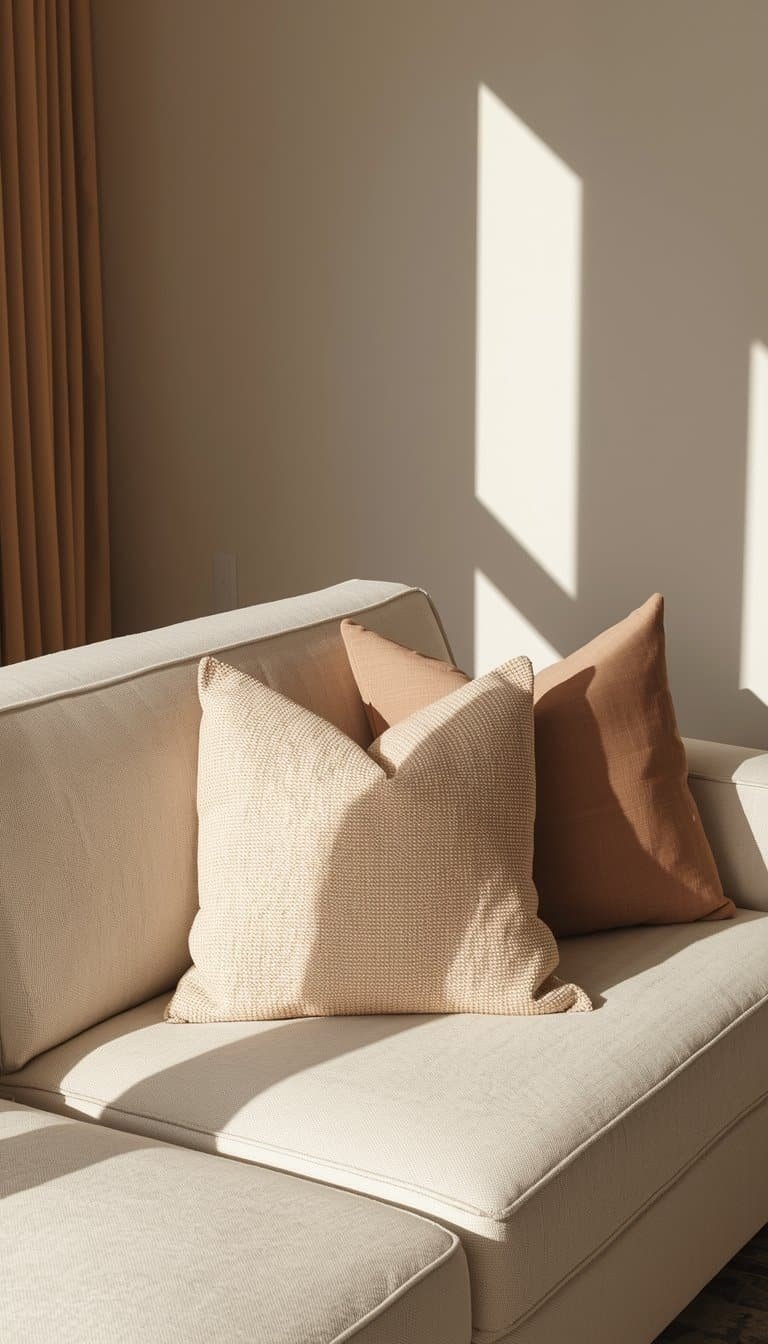
Throw pillows are one of the main reasons living rooms stop feeling calm — there are usually too many of them, in too many patterns, at too many sizes, and collectively they make the sofa look like a prop store rather than a place to sit. Editing down to three pillows maximum, in different textures from the same color family, is one of the highest-impact and lowest-cost changes you can make to your living room today. Three is the magic number because it allows for an organic, non-symmetrical arrangement that feels artfully placed rather than obsessively matched.
For a luxurious minimal look, choose two larger pillows in the same plain fabric — linen or washed cotton in your neutral palette — and one slightly smaller pillow in a contrasting texture like boucle, velvet, or a chunky knit. Place the two larger ones at each end of the sofa with the textured one slightly off-center in between. The arrangement looks considered and calm rather than over-styled, and the restraint signals confidence rather than an inability to commit. Remove every pillow that doesn’t belong to this trio and store them out of sight — your sofa will immediately look twice as expensive as it did this morning.
Shop the Look
- Linen Throw Pillow Cover in Neutral
- Cream Boucle Throw Pillow
- Muted-Tone Velvet Cushion
- Down-Alternative Pillow Insert 18×18
Minimalism in your living room isn’t about having less for the sake of less — it’s about making more room for the things that genuinely matter to you by being ruthless about what doesn’t. Every single idea in this list comes back to the same core principle: one deliberate choice, thoughtfully executed, will always outperform ten impulsive ones. Start with just one or two of these ideas this weekend, and I promise the momentum will carry you through the rest of the room.
If you loved this post, you’ll also want to check out 10 Minimalist Small Balcony Decor Ideas That Transform Any Outdoor Space— it applies the same furniture-first thinking to your most personal room in the house. Save this post to your Pinterest board so you can come back to each idea when you’re ready to tackle it.









2 thoughts on “10 Minimalist Living Room Decor Ideas That Feel Luxurious”